Outdoor Kitchen Installation in Valdosta, GA
Built from masonry rather than wood, topped with stone that survives the sun, and fitted with appliances rated for what our summers actually do to metal. This is Winnersville, and the yard should be ready when everyone comes over.
- Building outdoor kitchens in Valdosta and Lowndes County since 1972
- Masonry and aluminum framing only, never wood
- Countertop materials specified to handle direct UV
- Gas lines sized to total appliance load and pressure tested
- Licensed and insured outdoor living contractor
What Is Outdoor Kitchen Installation and How Is It Built for South Georgia?
Outdoor kitchen installation involves designing and building a permanent cooking and entertaining area that can handle outdoor conditions. It includes planning the kitchen layout, selecting weather-resistant materials, installing appliances, preparing utility connections and coordinating surfaces, cabinets and countertops. In South Georgia, material selection matters because heat, humidity and rain can quickly affect lower-grade components. Features such as 304-grade stainless steel and outdoor-rated refrigeration can provide better long-term performance.
Harbin’s Pools designs and builds outdoor kitchens around the way you use your backyard. We select materials and appliances suited to Valdosta’s climate while coordinating the kitchen with your pool, patio, deck, lighting and shade structures. Planning these elements together helps organize plumbing, electrical and other utilities efficiently. The finished kitchen becomes a functional part of the outdoor living area, giving you a dedicated place to cook, serve meals and entertain.
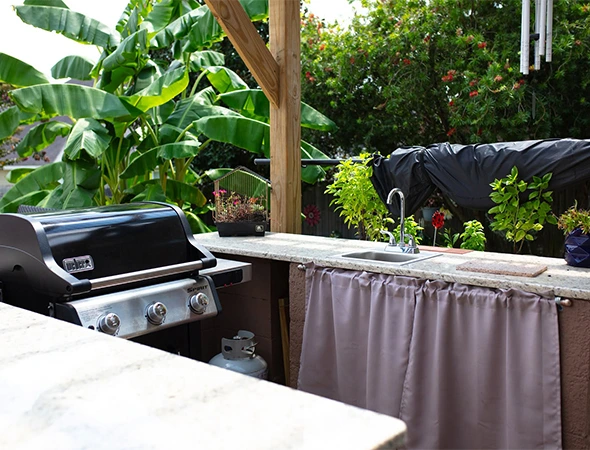
Our Services
Guests move between the water and the food constantly, so the walk needs to be short and the sightlines open. Whoever is cooking should still be able to watch the pool.
A spa keeps the yard in use through winter, which is exactly when a covered kitchen with a heat source earns its cost.
Planting near cooking has to tolerate heat and traffic and stay clear of anything that drops into food. It also screens the working side of the kitchen from the seating side.
The island itself is masonry work, and seat walls give overflow seating when the bar stools run out during a game.
Water sounds good until it competes with conversation over dinner. We set enough distance that it stays background rather than interference.
Yard access and open trenches are already part of a liner job, which makes it a practical moment to run kitchen utilities.
Masonry islands, built in grills, refrigeration, sinks, storage and bar seating, with gas, water and power run properly and countertops that hold up to direct sun.
Cooking after dark needs real task lighting at the grill and softer ambient light everywhere else. Two different jobs, two different fixture types.
After the food is done, people move to the fire. Placing the two within easy walking distance keeps the group from splitting in half.
The patio carries the tables, the chairs and the traffic. Its size determines how many people the kitchen can actually serve.
Grease, sauce and spilled drinks land near a kitchen. Unit paving lets you replace a stained piece instead of living with a mark on poured concrete.
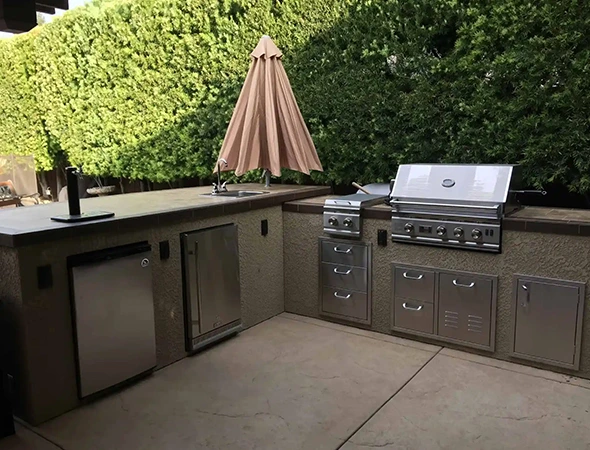
What You Get With a Harbin's Outdoor Kitchen
No wood anywhere in the structure. Masonry block or aluminum framing only, because South Georgia termites and humidity make wood framed islands a question of when rather than if.
Appliances specified at 304 stainless. Lower grades rust visibly within a couple of summers here. We size and select for the climate rather than the price tag.
Countertops that will not fade. Only UV stable materials get quoted for outdoor work, so nothing on your island is voiding its own warranty by sitting outside.
Landing space on both sides of the grill. Somewhere to set the platter down before and after cooking. It sounds minor and it is the thing people miss most in a badly planned island.
Gas sized to total BTU load. The line is calculated against every appliance running at once and pressure tested, not run at whatever diameter was on the truck.
Our Work Process
Step 1: Cooking and Hosting Layout
We ask how you cook, how many people you usually have over and where they naturally stand, then design the island shape and appliance positions around that.
Step 2: Utilities and Structure
Gas, water, drainage and dedicated circuits get trenched and rough inspected, then the masonry structure goes up and gets veneered.
Step 3: Appliance Set and Commissioning
Countertops are templated and set, appliances installed and connected, gas tested and every circuit checked before we hand it over.
Built-In Grill and Appliance Installation in Valdosta, GA
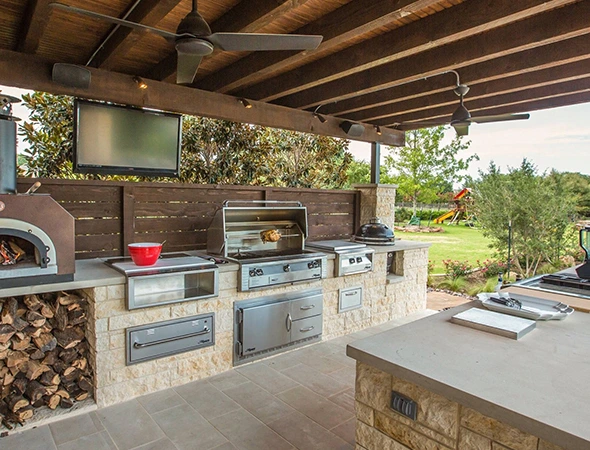
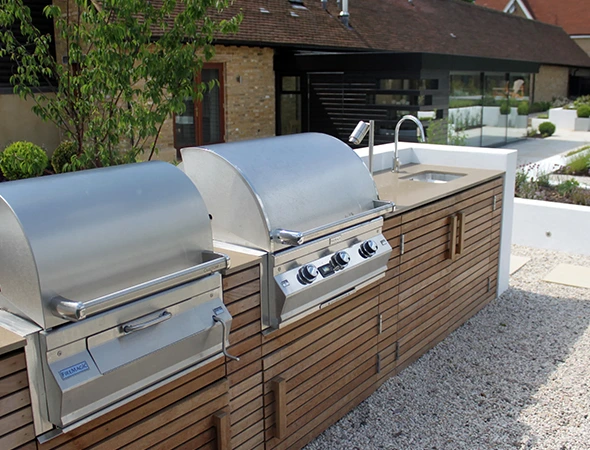
The grill decides the layout, so we choose it first. Gas grills suit weeknight cooking and quick turnaround, kamado ceramics hold low temperatures for long smokes and are a Georgia institution in their own right, and pellet smokers have taken over for anyone doing serious barbecue. Plenty of our clients want two heat sources rather than one.
Around that, the useful additions are a side burner for sauces and boils, a flat top griddle, an outdoor rated refrigerator and an ice maker with a proper drain. Everything built in needs correct clearance to combustibles, non combustible surround material, and access panels so a technician can reach connections without demolishing the island. We specify 304 grade stainless throughout, because in our humidity the cheaper grades start showing rust freckles by the second summer and never look right again.
Outdoor Countertops and Cabinetry in Valdosta, GA
Counter surface is where an outdoor kitchen either ages gracefully or embarrasses itself. Granite has been the dependable choice here for decades and handles heat, sun and rain with periodic sealing. Porcelain slab is the technically superior option now, since it is non porous, effectively stain proof, completely UV stable and available in thin profiles that look modern.
Concrete suits clients who want a custom shape, integrated drainboard or a particular color. Engineered quartz stays inside, full stop. Cabinetry follows the same logic, meaning stainless steel or marine grade polymer doors and drawers rather than anything wood based, with soft close hardware rated for outdoor use. Counter heights matter too. Working surfaces run around 36 inches while bar seating sits at 42 with a proper overhang, so guests have somewhere to put their knees. Behind the stools you still need room to walk past, which is a patio sizing question rather than an island one.
Gas, Water and Electrical Rough-In in Valdosta, GA
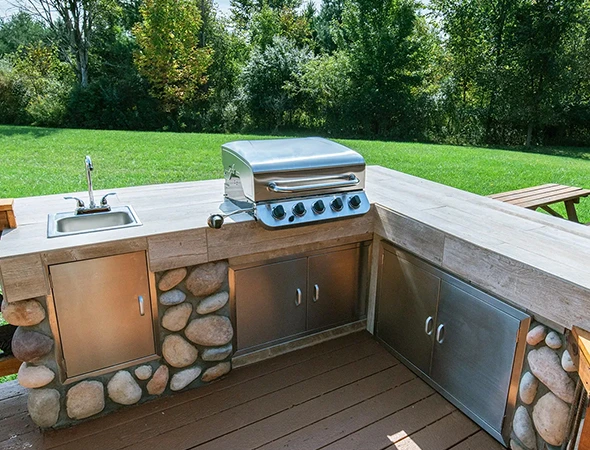
The utilities are invisible, and they are most of the job. Gas gets sized against the combined BTU demand of every appliance, since a line adequate for one grill will starve a grill, side burner, and griddle running together. Natural gas needs a tie-in and meter capacity check, while propane needs a tank location that is accessible for refills and correctly set back.
Electrical means dedicated GFCI-protected circuits for refrigeration, ice makers, task and ambient lighting, and outlets, in weather-rated boxes with in-use covers. A sink adds water supply and the drainage question, which, on many properties around here running septic rather than sewer, requires proper planning rather than a hose into the flowerbed. We insulate and protect exposed water lines too, because South Georgia gets a handful of hard freeze nights every winter, and that is all it takes to split a line.
Covered Outdoor Kitchens and Ventilation in Valdosta, GA
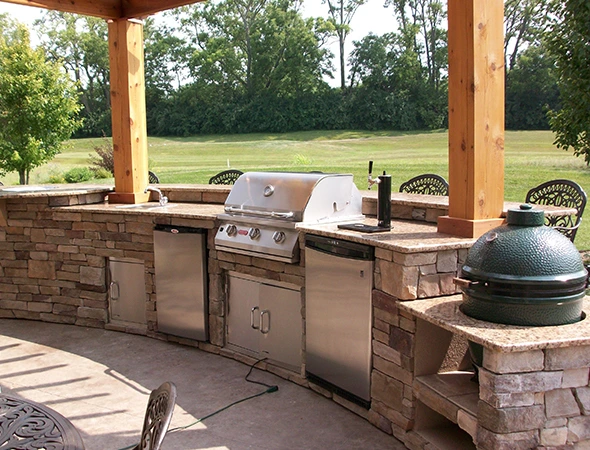
A cover is the single biggest factor in how often an outdoor kitchen actually gets used. With 48 inches of rain a year and summer afternoons that punish anyone standing over a grill, shade turns a fair weather setup into something you use through the season. Options run from an open pergola that breaks the sun while letting smoke escape freely, through to a fully roofed structure that keeps everything dry.
The critical rule is ventilation. The moment a grill sits under a solid roof it needs a properly sized vent hood, both to clear smoke and grease and to handle combustion byproducts safely, and clearances to any combustible framing become a code matter. Open air cooking under a pergola avoids that requirement entirely, which is why we walk clients through the tradeoff before choosing a structure. A gas fire table at the seating end extends the same season without bringing any hood or clearance requirement with it.
Outdoor Countertop Materials Compared
| Granite | Porcelain Slab | Concrete | Engineered Quartz | |
|---|---|---|---|---|
| UV stability | Excellent | Excellent | Excellent | Poor, fades and warps |
| Heat resistance | Excellent | Excellent | Very good | Moderate |
| Staining | Seal periodically | Highly stain resistant | Seal periodically | Not applicable outdoors |
| Look | Natural stone variation | Any pattern, thin profile | Custom shapes and colors | Not applicable outdoors |
| Relative cost | Middle | Middle to high | Varies with finish | Not recommended |
| Verdict here | Reliable default | Best technical performance | Good for custom forms | Keep it indoors |
FAQs
No, and it is one of the more expensive mistakes people make. Indoor refrigerators are engineered for stable room temperature and lose the ability to hold safe internal temperatures once ambient conditions climb into the high eighties, which describes most of a Valdosta summer. They also lack sealed components for humidity and insects, and using one outdoors voids the warranty. Outdoor rated units cost more because they are built with different compressors and sealed housings.
No. Engineered quartz is stone dust bound with polymer resin, and that resin breaks down under sustained UV exposure, causing visible fading, discoloration and eventually warping. Virtually every major manufacturer explicitly excludes outdoor installation from their warranty coverage. Granite, porcelain slab, soapstone and sealed concrete are the correct outdoor choices and all of them will outlast quartz in the sun by decades.
Only if the grill sits under a solid roof or any enclosure that traps smoke. Open air cooking, including under a slatted pergola with free airflow above, does not require one because smoke and combustion gases dissipate naturally. Under a solid roof a properly sized hood becomes a safety requirement rather than a convenience, and clearances to combustible framing come into play. This is worth settling during design, since adding a hood to a finished roof is expensive.
Natural gas is cheaper to run, never needs refilling and is the better long term choice if your property has a supply line, which is common on in town Valdosta addresses and less so on rural lots around Hahira and Nashville. Propane requires tank storage and refills but delivers more heat per unit and works anywhere. The deciding factor is usually simply whether gas service reaches your property and whether the meter has capacity for the added load.
Start by removing what they attack, which means no wood in the structure or the cabinetry. Masonry or aluminum framing with stainless or marine polymer doors gives insects nothing to eat and moisture nothing to rot. Seal every penetration where utilities enter the island, since open cavities become nests. Beyond that, keeping food sealed and cleaning grease from surfaces regularly handles the rest, because it is residue rather than the structure that draws pests once the materials are right.
Contact Us
Tell us how you cook and how many people you usually feed. We will lay out an island that fits your yard, your budget and the way you actually entertain.
About Us
Harbin’s Pools has been building outdoor kitchens across Valdosta and South Georgia since 1972. We frame in masonry rather than wood, specify countertops and appliances that survive direct sun and humidity, and run gas, water and power to code as a licensed and insured outdoor living contractor. Fifty years in this climate is how we know which materials quietly fail here.